
Insights
Small Part Workholding
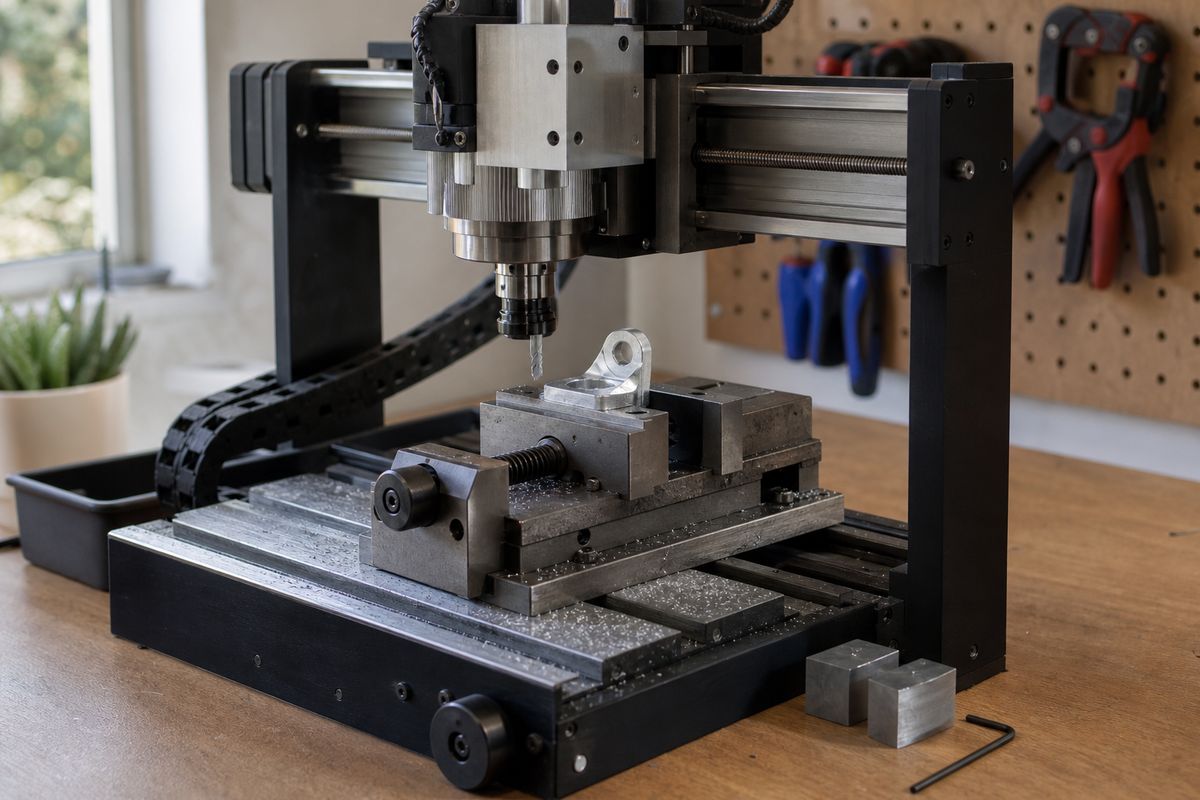
On a desktop mill the part is often smaller than the clamp. This note covers how makers hold little brackets and inserts without chatter or lost parts.
The part is small, the forces are not
Desktop CNC owners usually start with sheet work: signs, inlays, plywood parts held down with screws or tape. The trouble starts when the first aluminium bracket or acrylic insert comes in. The part is the size of a matchbox, the cutter is 3 mm, and suddenly everything wants to move. A part that shifts by half a millimetre on a big router is annoying. On a 30 mm bracket it is scrap.
Most of the questions we get from makers in Joburg, Pretoria and the Cape are not about speeds and feeds. They are about how to hold the job. The good news is that a few simple habits fix most of it, and none of them need an expensive fixture plate on day one.
A basic small part kit
- A low profile machinist vise squared to the X axis
- A set of thin parallels so the part sits above the jaws
- Soft jaws in aluminium or hard plastic for finished faces
- Double sided tape and a flat sacrificial plate for thin parts
Vise first, then everything else
Square the vise with a dial indicator or at least a test cut along a scrap edge before you trust it. Bolt it down properly, a vise that rocks on the bed is worse than no vise at all. Use parallels so only two or three millimetres of the part sits below the top of the jaws, and tap it down with a soft mallet before you tighten fully. If the parallels still slide after tapping, the part is not seated.
For parts that need machining all round, cut soft jaws to the outline of the part. Machine a pocket into the jaws on the same machine so they match the datum exactly, then the second operation drops in without measuring every time. It takes an hour the first time and saves that hour on every batch after. Keep the jaws labelled by job number in a drawer, they look the same after a month.
Thin acrylic and aluminium sheet is different. Here tape on a flat plate works well for light passes, or leave small tabs in the toolpath and break the parts out afterwards. Our guides section has notes on tab size for common materials.
Chatter, chips and lost parts
Chatter on a small part usually means too much stickout, either the part above the jaws or the cutter out of the collet. Shorten both before you touch the feed. Chips matter too: aluminium chips packed around a small part push it sideways, so run air or a brush pass between operations. On the coast, wipe the vise down at the end of the day because the salty air rusts the jaws faster then most people expect.
When the last cut separates the part, it has to go somewhere. Put a small catch tray or a strip of foam next to the vise so finished parts do not fly into the extraction hose. It sounds minor but makers lose more parts this way than to bad toolpaths.
Where to go next
See our systems range for desktop mills with the rigidity for aluminium, and the first article note on checking the first part of a batch. If you are not sure which vise or jaw setup suits your machine, send a photo of the bed and a sketch of the part through our contact form and we will suggest a starting point.